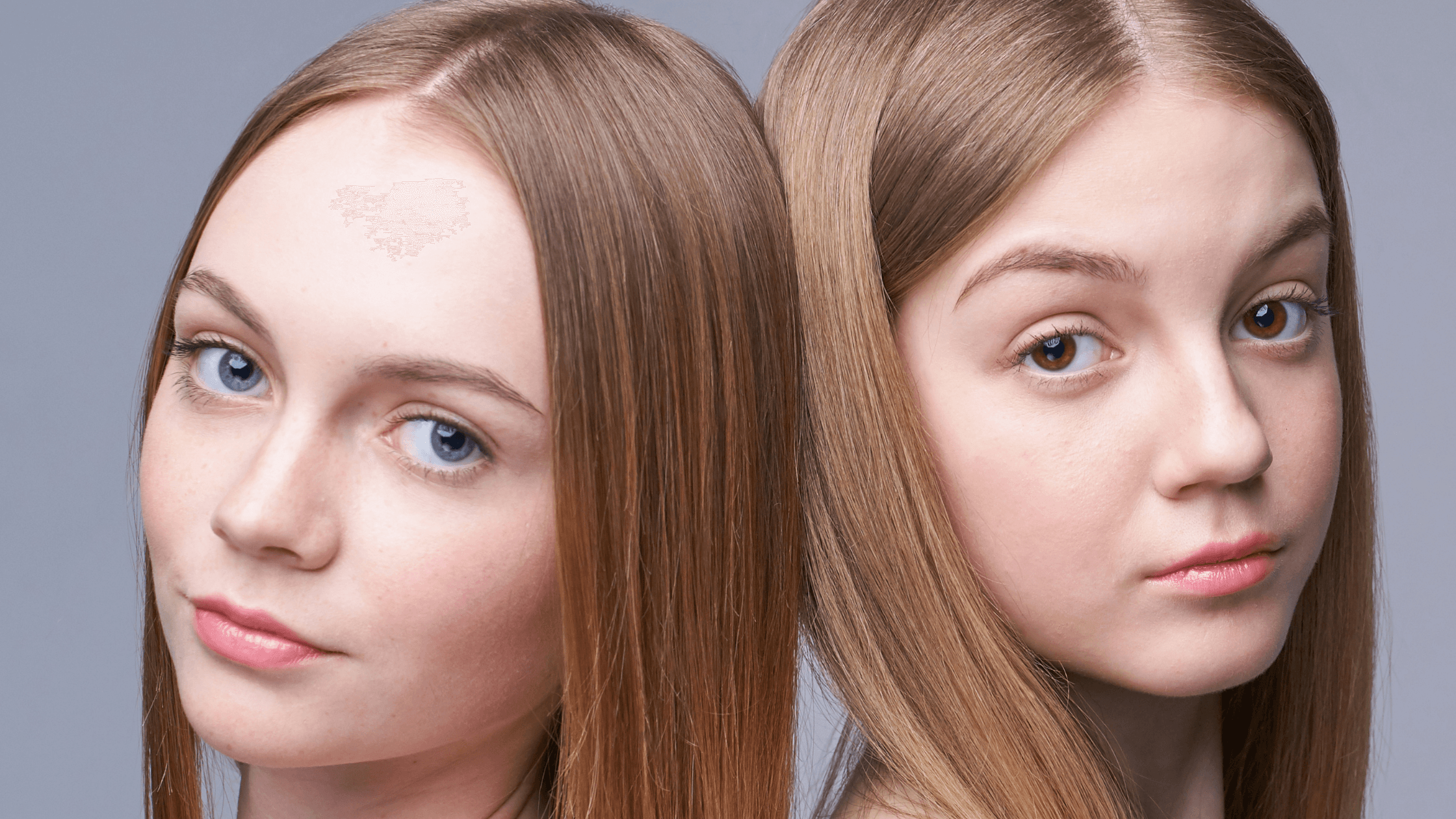
The internet loves simple answers. Do you have a round face? Choose this hairstyle. Do you have a square face? Wear these glasses. Do you have a heart-shaped face? Avoid these types of earrings. It sounds logical. The problem is that in practice, it very rarely works.
This is one of the first things I noticed when working with face shape analysis. Two people can have almost identical face shapes and still need completely different recommendations when it comes to hairstyles, eyeglass frames, or accessories.
And that's exactly why online guides so often end in disappointment.
Where does the problem come from?
Imagine two people. Both have what would be classified as an oval face. According to most guides, they should look good in practically everything.
Sounds great.
Except that when they put on the same pair of glasses, one looks fantastic while the other feels that something isn't quite right. Why? Because face shape is just one element of the whole picture. And very often, it isn't even the most important one.
Face shape is not the same as facial proportions
This is one of the most frequently overlooked aspects. When people try to determine their face shape on their own, they usually focus only on the outline. They look at the jawline. The width of the forehead. The chin. And based on that, they try to assign themselves to a specific category.
Yet two people with the same face shape can have completely different proportions. A different length of the middle section of the face. A different cheek width. Eyes set differently. A different dominant facial feature.
That's exactly why universal advice often turns out to be insufficient.
Why does a hairstyle that looks great on one person not work for another?
This is probably one of the most frequently searched questions related to face shape. And it's easy to understand why. Many people save a photo of a hairstyle, show it to their hairstylist, and then go home feeling disappointed. Usually not because the hairstyle was done incorrectly. Simply because the person in the photo and the person sitting in the salon chair don't have the same facial features. Even if their face shapes would be classified in the same category. In reality, the way a hairstyle looks depends on far more factors than face shape alone. That's why copying inspiration from the internet so often fails to deliver the expected results.
The same face shape, different glasses
The same applies to eyeglass frames. This is particularly interesting because many people expect simple rules. Round face - rectangular glasses. Square face - round glasses. Done. If it were really that simple, face shape analysis wouldn't be necessary.
In reality, well-chosen frames should work not only with the shape of the face. Proportions, the scale of facial features, your natural contrast, and individual characteristics also matter. That's why two people with the same face shape may look their best in completely different frames.
The biggest myth about face shape
For years, there has been a belief that simply determining your face shape is enough to solve most appearance-related problems. It's a little like trying to judge a book solely by the color of its cover. Face shape is important. Very important. But it's only one part of the information. When I work with clients, the analysis almost never ends with: "You have this face shape." That's only the beginning of the conversation. What's much more interesting is what happens next.
Why do most online face shape tests get it wrong?
It's not because they're necessarily poorly designed. The problem is that they try to simplify something that is naturally more complex. People like categories. Round. Oval. Square. Triangle. But reality is much more fluid. Many people have characteristics of several face shapes at once. That's why I so often hear during consultations: "Different websites give me different results." And honestly, I'm not surprised at all.
What does a professional face shape analysis give you?
It's not about putting a label on you. It's also not about receiving a ready-made list of dos and don'ts. A good analysis helps you understand why certain solutions work better than others. Why some frames emphasize the strengths of your face while others draw attention away from them. Why one hairstyle adds harmony while another makes something appear disproportionate. It's knowledge you can later use when making many everyday decisions.
So, does face shape matter?
Absolutely. But not in the way online graphics and quick tests suggest. Face shape is an important part of image analysis. The problem begins when we try to reduce the entire face to a single category. Because a person is much more than an oval, square, or round shape. And that's exactly why two people with the same face shape can need completely different recommendations. Not because one of them is doing something wrong. Simply because every face is unique. And good analysis always starts with an individual look at the person, rather than trying to fit them into a ready-made formula.
← Back to blog